
The Strait of Hormuz is one of the most strategically important waterways in the world. It has already been mentioned in one of our previous arcticles, but this time we will go into more details.
Geographical location
Located between the Persian Gulf and the Gulf of Oman, or in other words between Oman and Iran, this narrow passage serves as a critical route for international oil shipments and global trade. Despite being only about 33 kilometers wide at its narrowest point and 167 kilometres long, the strait plays an imence part in development of global economics and has a really huge influence in global politics. The geographic location of the Strait of Hormuz gives it exceptional strategic value.
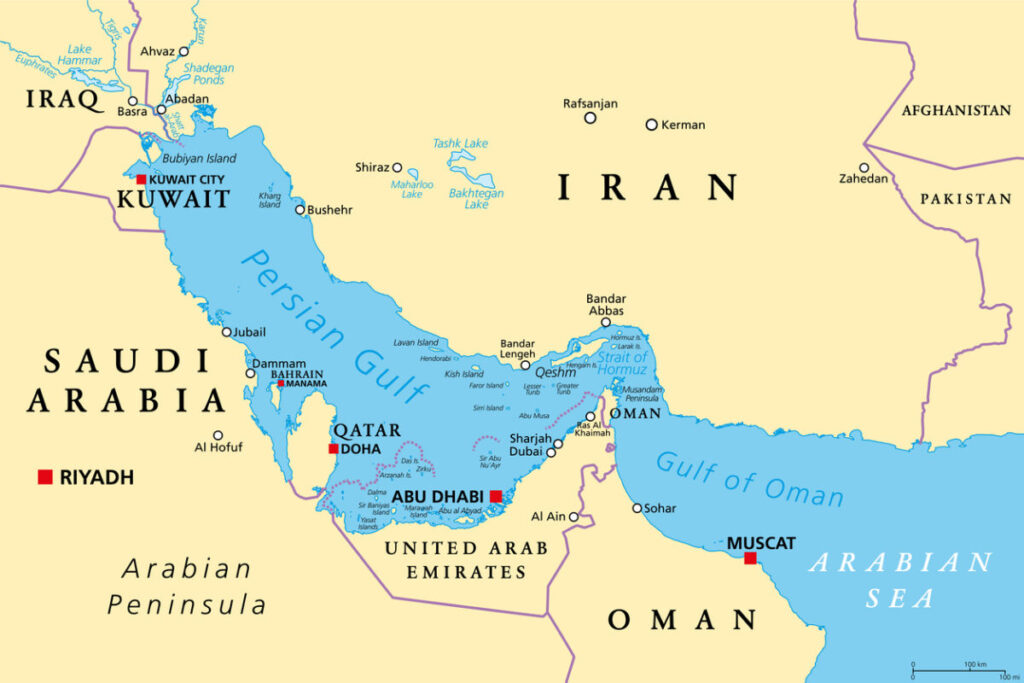
Geographical location of the Strait of HormuzIran controls the northern coastline, while Oman and the United Arab Emirates are located to the south. Because of this positioning, regional tensions often place the strait at the center of international attention. Political disputes, military activities, and sanctions involving Iran have repeatedly raised concerns about the safety and stability of shipping in the area.
Economic importance
According to energy analysts 1/3 of the world's liquefied natural gas and almost 25% of total global oil consumption consumption passes through the strait, highlighting it's importance to global energy security. Every day, millions of barrels of crude oil pass through the Strait of Hormuz, making it one of the busiest maritime chokepoints on Earth. Major oil-producing countries positioned around The Strait, such as Iran, Iraq, Kuwait, Saudi Arabia, United Arab Emirates, Oman, heavily rely on this route for transportation of energy resources to markets in Europe and Asia. It represents a vital link between Middle Eastern energy producers and the rest of the world.
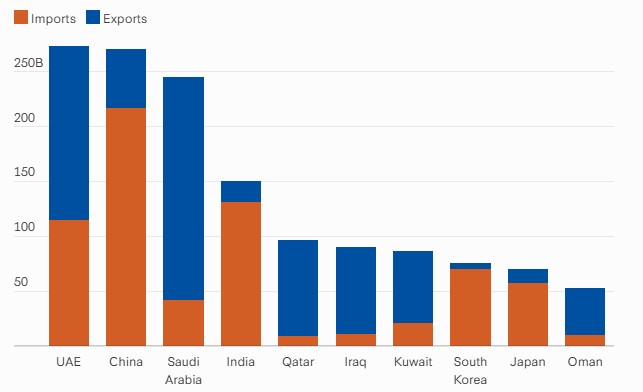
Financial value for some of the countriesOver the years, the Strait of Hormuz has witnessed several incidents involving oil tankers, naval forces, and commercial ships. During periods of heightened tension, fears of disruption in the strait often lead to fluctuations in global oil prices. Even the possibility of limited conflict or shipping delays can impact financial markets and energy supplies worldwide. This demonstrates how interconnected the modern global economy has become.
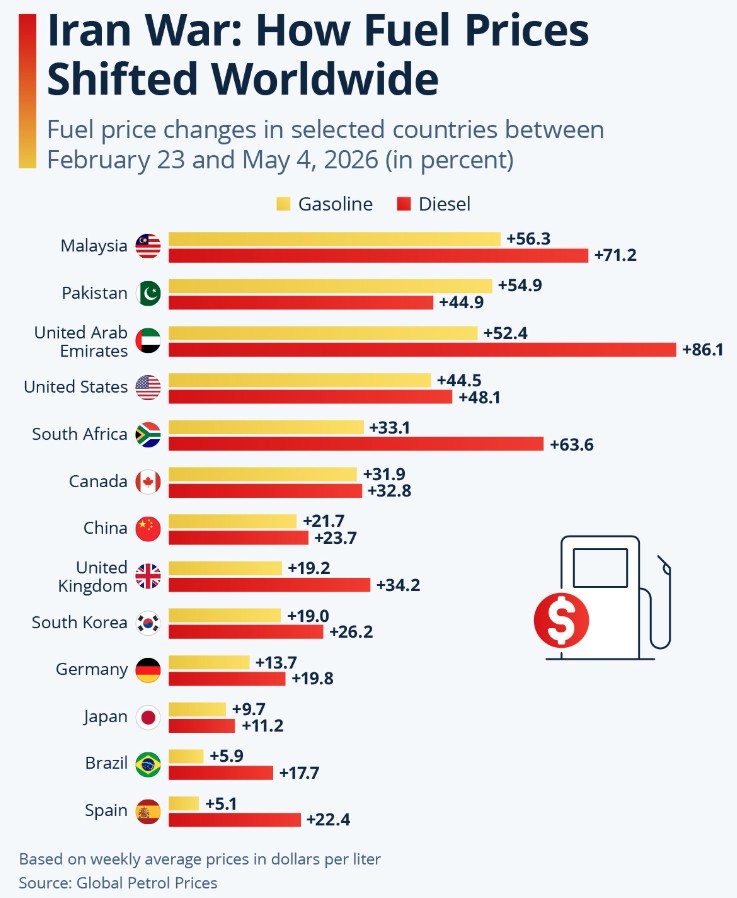
Global petrol price changes since the start of US-Iran confilct from the early 2026.In addition to oil transportation, the strait also serves as an important route for liquefied natural gas (LNG) exports, especially from Qatar, one of the world’s leading LNG producers. As countries increasingly depend on natural gas for cleaner energy production, the role of the Strait of Hormuz continues to grow in significance.
Political and military significance
To maintain freedom of navigation and protect commercial shipping, several countries, including the United States and its allies, maintain a naval presence in the region. International maritime patrols aim to prevent piracy, ensure safe passage, and deter potential threats. However, the military presence also reflects the fragile security environment surrounding the waterway.
The Strait of Hormuz is not only important economically but also politically. It symbolizes the delicate balance of power in the Middle East and serves as a reminder of how geography can influence international relations. Control over strategic waterways has historically shaped global trade and diplomacy, and the Strait of Hormuz remains a modern example of this reality.
Conclusion
As the world transitions toward renewable energy and diversified supply chains, some experts believe that dependence on the Strait of Hormuz may gradually decrease. However, for the foreseeable future, it will remain one of the most crucial maritime corridors in the world.Its stability is essential not only for oil-producing nations but also for consumers and industries across the globe.
In conclusion, the Strait of Hormuz is far more than a narrow waterway. It is a lifeline for global energy trade, a focal point of geopolitical tensions, and a symbol of the interconnected nature of today’s world economy. In case you have further interest in this topic, please check the video.
For more useful and interesting information from the world of logistics, supply chain, transportation of goods and cargo, visit blog section on our website.
Lastly, If you have a need for cargo transportation or you need advice on logistics processes, feel free to click on the contact information.

